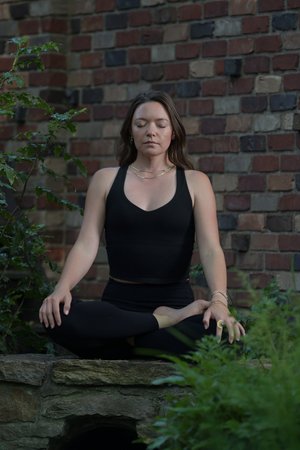
While hiking in the Moab desert with a friend, we were identifying plants. Big Sagebrush (Artemisia tridentata) is quintessential in the Utah desert, offering silvery foliage year-round. “Is that what I shouldn’t burn since I’m a white yoga teacher?” she asked. The question made me think, as it is an argument I’ve heard before, but my gut telling me it’s more of a nuanced question than it seems.
Is burning sage cultural appropriation?
Combining yoga and sage is complicated, as yoga is an Eastern practice and burning (white) sage is an indigenous practice. I am neither Indian nor Indigenous, and yet I practice yoga and burn herbs. I respect and honor both cultures with the information I currently have.
Intention matters. Words matter. Firstly, I think this is a matter of words.
Smudging is an Indigenous practice that goes beyond cleaning the air or energy.
Smoke cleansing is a practice that has been used around the world in many different traditions to clear viruses, energy, and more from an environment.
So, I have chosen to purposely use the words ‘smoke cleansing’ when talking of the act of burning plant materials, as I think it’s more appropriate. Indeed, when I burn incense or plants, I am combining intention, but it is not in preparation for ceremony; it is the ceremony.
Should yoga studios burn sage?
Should yoga/meditation/public spaces burn sage? I don’t think so. In my 10+ years of experience working in yoga studios and in retreat settings, I don’t think it’s appropriate to subject numerous people to burning sage, incense, or palo santo. For every one person that likes it, there’s one that complains. The strong odor combined with smoke is difficult for a lot of people- especially when your average incense is full of artificial fragrance. I knew a lady who couldn’t stay in the studio at the slightest hint of lavender essential oil. The world is heavy with fragrance and pollutants- I do my best to keep them to a minimum in public settings.
However, I do think it’s appropriate for the studio owner or manager to cleanse the space with smoke and intention while students are not in the building to clear and reset energies.
Should I burn sage?
I look at this question from an herbalist/forager point of view. White sage is at risk of being over-harvested in its native habitat. Commodification of sage has encouraged people with no reverence for the plant to over-harvest or completely kill the plant for a few dollars. White Sage, along with other herbs- Goldenseal, American Ginseng, and Black Cohosh, to name a few- are at risk. Palo Santo has complications, and many people are choosing not to purchase it.
What to look for when choosing herbal products
I like to first ask myself why I need this product and whether there are alternatives. We buy too much stuff to begin with. Is there something in your backyard, or your local landscape that could be used instead? Rosemary, cedar, sagebrush, bay leaf, eucalyptus, mugwort, and more can be bundled and burned. If you do decide to buy, check for sustainable sourcing. I like B-corp brands, as it’s a more rigorous certification that ensures transparency and accountability. You could find small farmers growing herbs
This is strictly my opinion, and I’d love to hear your thoughts. This blog by Mountain Rose talks more about each culture and why ‘smudging’ can be harmful.
Happy cleansing!