Admittedly, growing up in Salt Lake City near the Wasatch Mountains is NOT how I became interested in medicinal plants. The Wasatch inspired me much more with its craggy peaks and wildflowers. Identifying plants here has been challenging for me, because there are so many throughout the state, and the Rockies are particularly diverse! Endemic is a term used to describe a plant species that is native to a specific geographical area and found nowhere else in the world. Did you know that Utah is home to anywhere from 200 to 300 endemic plants? Utah ranks 6th in the nation for plants that are only found here!
Here are four medicinal plants to look for on your next walk in the Wasatch (and really most of the mountainous west!)!
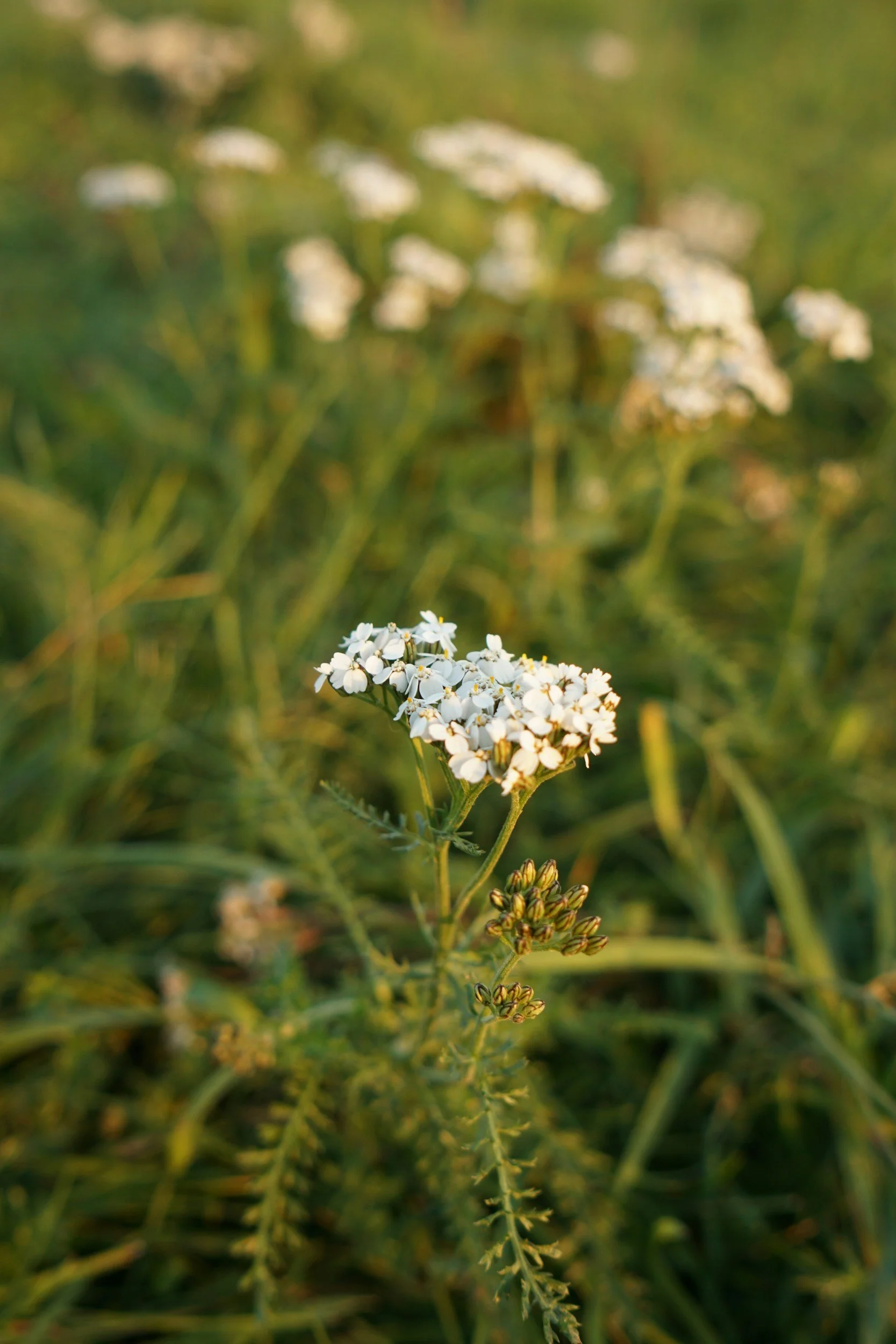
yarrow in flower
YARROW
Achillea millefolium
IDENTIFICATION
• Feathery, fern-like leaves
• Flat white flower clusters
• Sunny trails + disturbed soils
MEDICINAL USES
• Stops bleeding
• Wound healing
• Fever + cold support
PREPARATION
• Fresh poultice
• Tea
• Tincture
• Topical oils
BEST TIME TO HARVEST
Late spring → mid summer (May–July)
ENERGETICS
Ayurveda:
Cooling, drying
Balances Pitta + Kapha
Western Herbalism:
Astringent, diaphoretic
Moves heat outward, supports circulation
CAUTION
Avoid during pregnancy. Yarrow is in the Asteraceae family, and some people have an allergic reaction to this family. Water hemlock & poison hemlock also have white, umbel flowers, so be sure of your identification.
ETHICAL HARVEST
Harvest lightly, abundant patches only. Never strip a plant of all of its leaves.
stinging nettle
STINGING NETTLE
Urtica dioica
IDENTIFICATION
• Serrated leaves with stinging hairs
• Moist, shaded environments
MEDICINAL USES
• Mineral-rich tonic
• Allergy support
• Anti-inflammatory
PREPARATION
• Tea
• Tincture
• Vinegar
• Cooked greens
BEST TIME TO HARVEST
Spring → early summer (before flowering)
ENERGETICS
Ayurveda:
Cooling, slightly drying
Balances Pitta, can support Vata when nourished
Western Herbalism:
Nutritive tonic, alterative
Builds blood, restores depleted systems
CAUTION
Use gloves when harvesting to avoid formic acid and histamine reaction… or don’t.
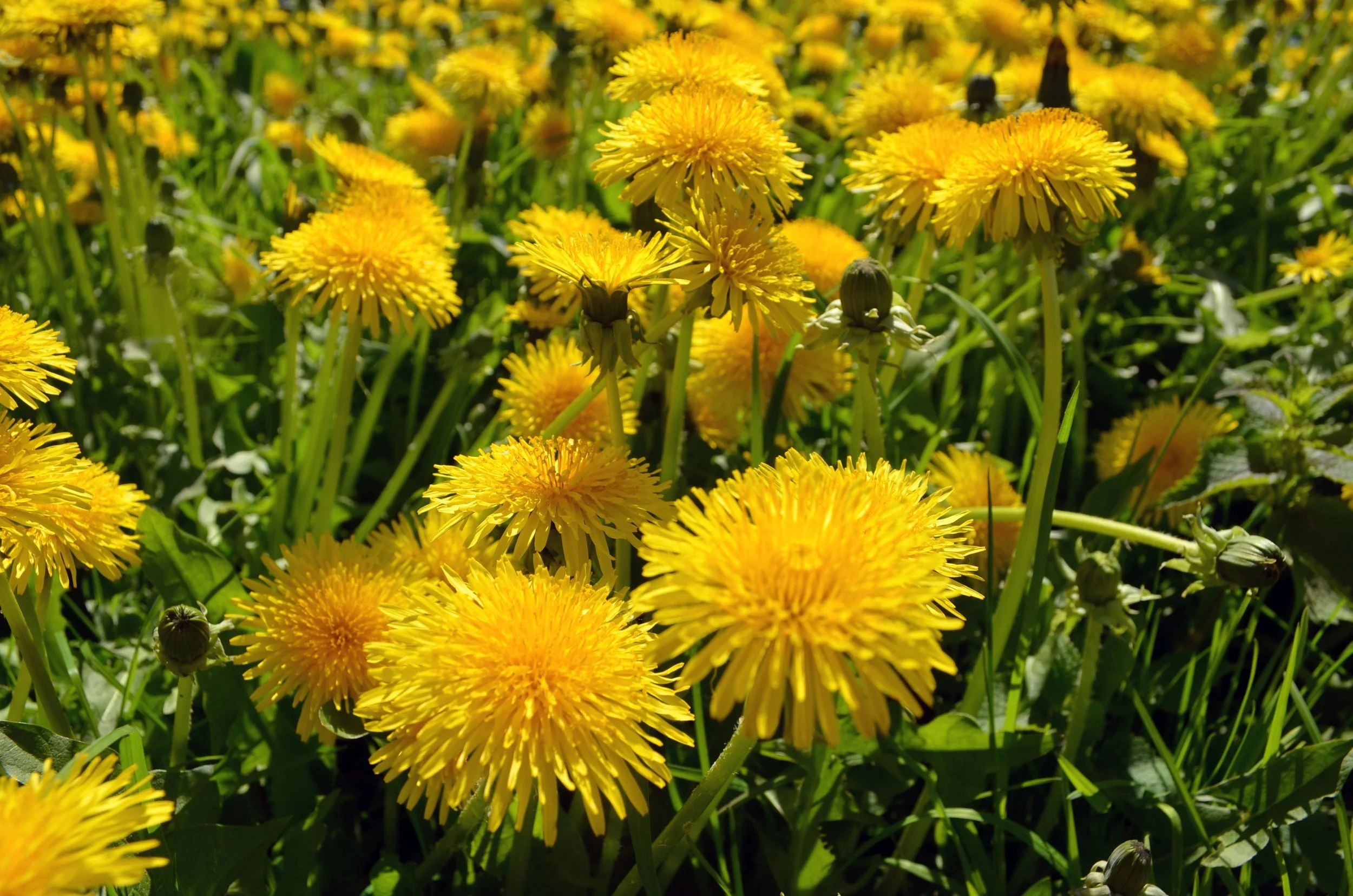
dandelion in flower
DANDELION
Taraxacum officinale
IDENTIFICATION
• Yellow flowers
• Jagged basal leaves
• Milky sap
MEDICINAL USES
• Liver + digestive support
• Bitter tonic
• Mild diuretic
PREPARATION
• Root decoction
• Leaves fresh or tea
• Tinctured
• Flower oil
BEST TIME TO HARVEST
Leaves: early spring
Roots: fall
ENERGETICS
Ayurveda:
Cooling, bitter
Strongly reduces Pitta, clears heat from the liver
Western Herbalism:
Bitter tonic, hepatic
Stimulates digestion and bile flow
CAUTION
Avoid sprayed areas. If harvesting at home, do not spray for a minimum of three years. Dandelion is in the Asteraceae family, and some people have an allergic reaction to this family.
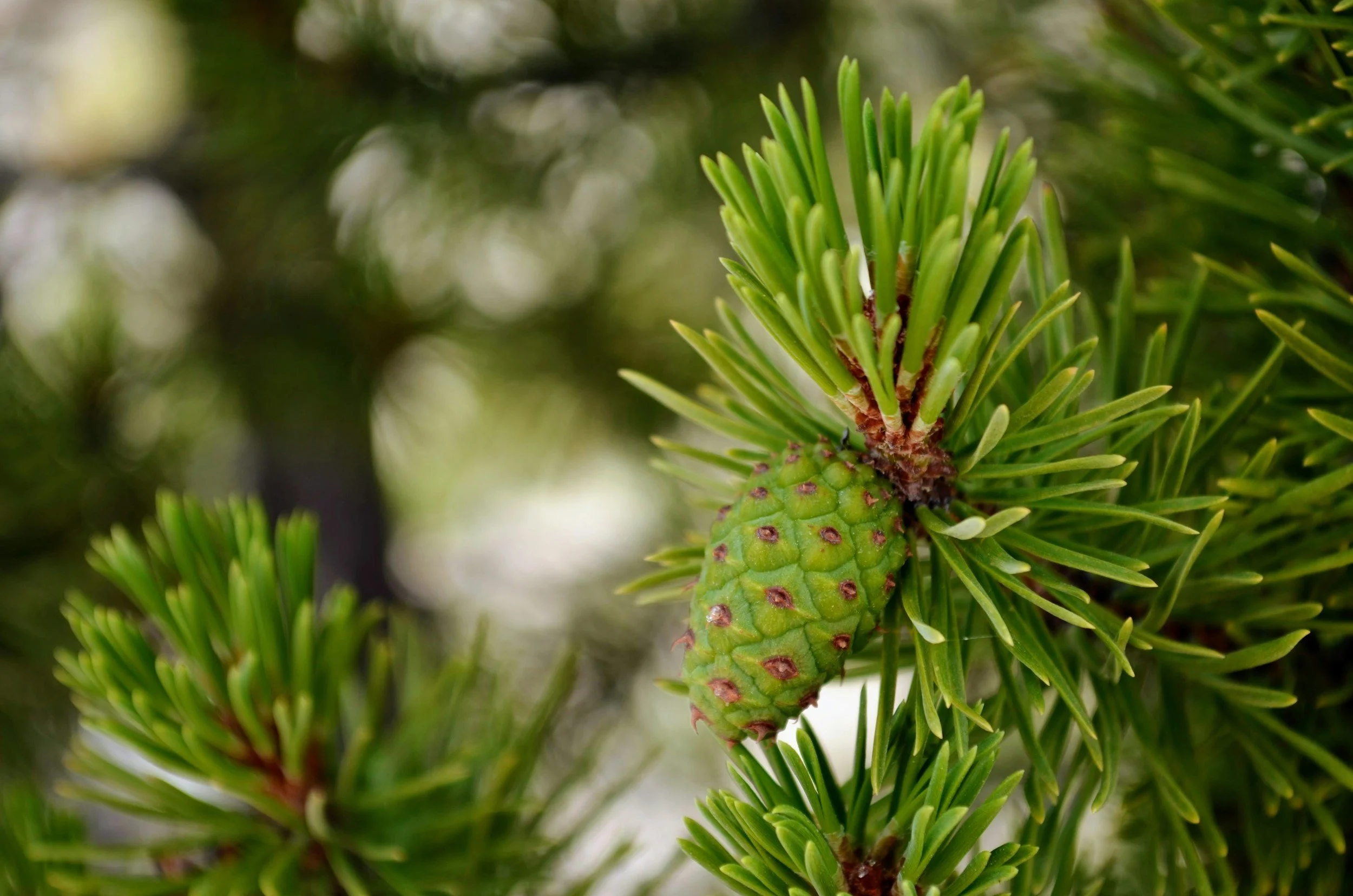
spring pine cones
PINE
Pinus spp.
IDENTIFICATION
• Needle clusters
• Cones + resin scent
MEDICINAL USES
• Vitamin C source
• Respiratory support
• Antimicrobial resin
PREPARATION
• Needle tea or vinegar
• Resin salve
• Pollen tincture
BEST TIME TO HARVEST
Year-round (best in spring for fresh tips)
ENERGETICS
Ayurveda:
Warming, stimulating
Balances Kapha, may aggravate Pitta in excess
Western Herbalism:
Stimulating expectorant
Moves stagnation in lungs + sinuses
Resin can be used topically
CAUTION
Avoid confusion with yew (toxic)
Remember, plants are not just here for us to personally gain from. They serve a purpose in their environment, and if we over-harvest, we disrupt that ecosystem. Only pick what you can use- particularly when you’re picking part of the plant that will prevent it from going to seed or otherwise reproducing (flowers, roots).
The Salt Lake Valley is recognized as the traditional and ancestral homeland of the Ute, Paiute, Goshute, Shoshone, and Dine/Navajo peoples as the original stewards and inhabitants of the land. I would like to acknowledge that many of the plants in this region have been used as medicine, food, and for ceremony. This knowledge is not just ecological, but also deeply cultural, and I hope to learn, share, and harvest in ways that respect sovereignty and stewardship.